Pet care guide
How to choose a dog food: a plain-language guide
By the Animal House team · Reviewed
Does life stage matter?
Yes. Puppies need food made for growth, adult dogs need food for maintenance, and many senior dogs do well on foods made for older dogs. Large-breed puppies have their own formulas to help them grow at a steady pace, so check the bag says it suits your puppy's expected adult size.
Does my dog's size matter?
Small-breed foods usually have smaller kibble that's easier for little mouths, and large-breed foods are made with bigger dogs in mind. Pick the size that matches your dog.
How do I read the label?
- Look for a statement that the food is complete and balanced for your dog's life stage. That means it's meant to be the only thing your dog eats.
- Ingredients are listed in order of weight, heaviest first.
- The guaranteed analysis shows minimum protein and fat and maximum fibre and moisture, which helps you compare foods.
Grain-free or with grains?
Both grain-inclusive and grain-free diets can provide excellent, complete and balanced nutrition for your dog.
Kibble, wet food or a mix?
Kibble is convenient and easy to store. Wet food adds moisture and many dogs find it tasty. Plenty of owners mix the two. Whatever you choose, keep the total amount in line with the feeding guide.
How do I switch to the new food?
Gradually, over about a week. See our guide on how to switch your dog's food.
Can staff help me choose?
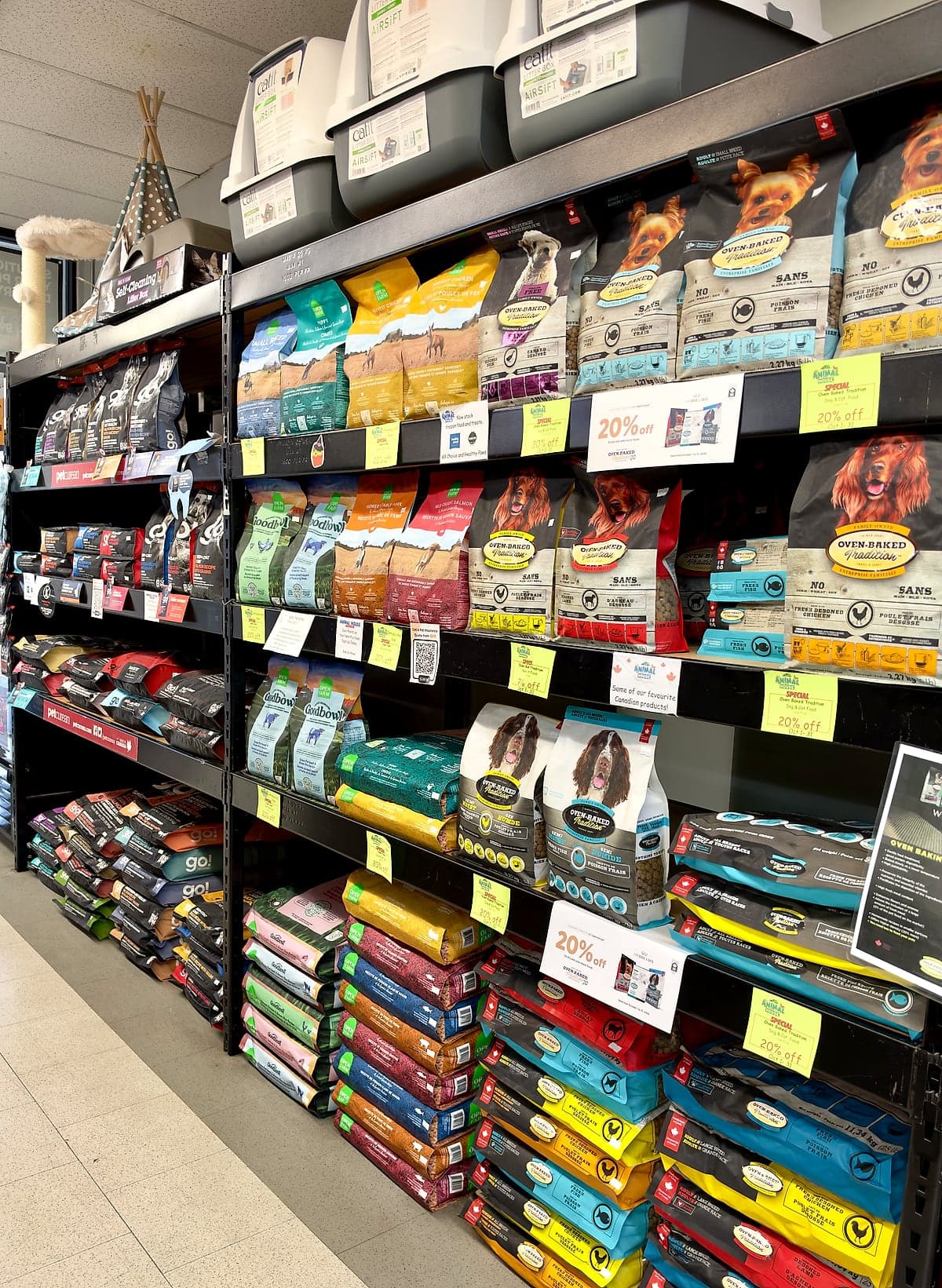
Yes. Bring your dog's current bag or a photo of the label and staff can talk you through the options on the shelf.